Some games get played once and forgotten. Others get played once and never leave you – this makes them the best video games ever. The titles on this list belong to a rare third category — games so perfectly designed, so deeply imagined, and so emotionally resonant that they have outlasted every console generation, every graphical revolution, and every shift in gaming culture. These are not just the best games ever made. They are the ones that proved, beyond any doubt, that video games are one of the most powerful art forms humanity has ever invented.
10. The Legend of Zelda: Ocarina of Time (1998)
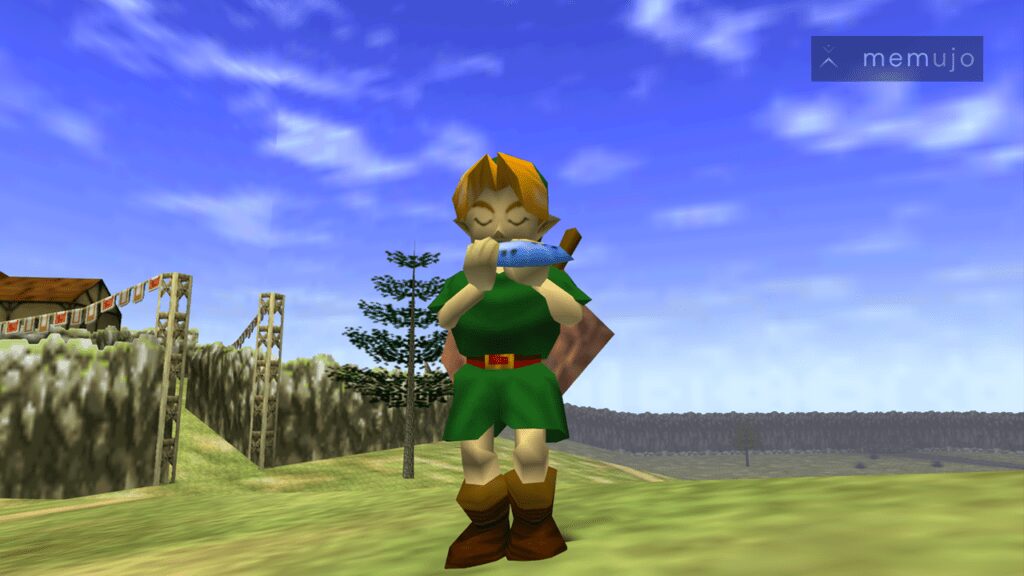
There is a reason that nearly three decades after its release, Ocarina of Time still appears at the top of almost every “greatest games ever made” list ever published. Nintendo’s 1998 masterpiece didn’t just define the 3D action-adventure genre — it invented the grammar that nearly every game in the genre still uses today. The lock-on targeting system, the context-sensitive action button, the day-night cycle, the use of music as a puzzle mechanic — all of it pioneered here, all of it still being borrowed by developers who weren’t even born when the game launched.
But what makes Ocarina of Time truly immortal is not its mechanics. It is the feeling of Hyrule. The moment you step out of Kokiri Forest and the field opens up in front of you — with that sweeping orchestral theme and the sun moving across the sky — is one of the most transcendent moments in the history of the medium. It is a game about growing up, about loss, and about the irreversibility of time. It just wraps all of that in a boy with a sword and a fairy.
9. Tetris (1984)
No game in history has been played by more people. No game in history has been ported to more platforms. And no game in history has proven more convincingly that the most elegant design is always the simplest. Alexey Pajitnov’s 1984 puzzle game has exactly one mechanic — rotating falling shapes to complete horizontal lines — and that single mechanic has generated more cumulative hours of human play than any other entertainment product ever created.
Tetris is also one of the few games that genuinely transcends age, culture, gender, and gaming experience. You can hand a controller to someone who has never played a video game in their life, load up Tetris, and they will understand it within thirty seconds. That universality is not an accident — it is the product of a design so perfectly calibrated to the human brain’s pattern-recognition instincts that it feels less like a game and more like something that was always there, waiting to be discovered.
8. Red Dead Redemption 2 (2018)
Rockstar Games spent eight years and reportedly over $540 million making Red Dead Redemption 2, and every dollar and every hour is visible on screen. The game’s open world — a painstakingly recreated version of America’s dying frontier at the turn of the 20th century — is the most detailed, most alive, and most emotionally textured environment ever constructed in a video game. Snow accumulates on Arthur Morgan’s coat. Mud clings to his boots. Animals behave according to predator-prey hierarchies. The world does not pause when you are not looking at it.
But the reason RDR2 belongs on this list is Arthur Morgan himself — one of the finest protagonists in the history of interactive storytelling. His arc, told across nearly 60 hours of gameplay, is a meditation on loyalty, redemption, and dying with honour in a world that no longer has room for the kind of man you are. Players who finished the game’s epilogue in silence, unable to move, were not responding to a cutscene. They were grieving a person they had come to love.

7. Minecraft (2011)
No game has shaped a generation of young people more profoundly than Minecraft. Markus Persson’s deceptively simple sandbox — a procedurally generated world of infinite blocks where the only rule is that there are no rules — became the best-selling video game of all time, with over 300 million copies sold across all platforms. It is played in schools, used by architects and city planners to prototype designs, and credited by an entire generation of developers as the game that made them want to make games.
What Minecraft understood, before almost anyone else, is that the most powerful thing a game can give a player is not a story — it is a canvas. Players have used that canvas to recreate the entirety of Middle-earth, build working computers inside the game engine, and construct pixelated replicas of famous paintings. Minecraft is not a game. It is a creative medium wearing the skin of one.
6. The Last of Us (2013)
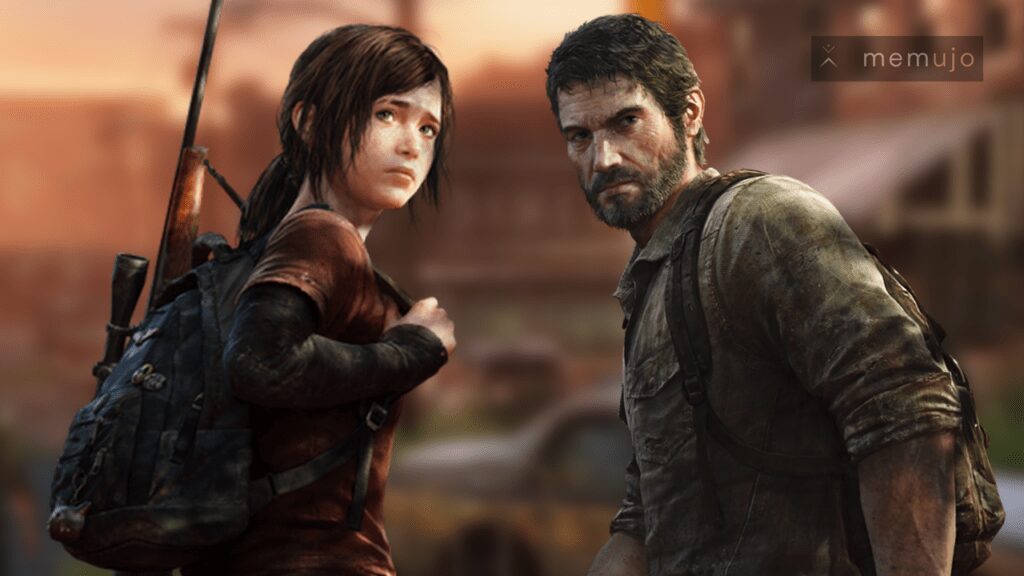
When Naughty Dog released The Last of Us in 2013, it didn’t just raise the bar for narrative in video games — it moved the bar to a room that most games hadn’t even found yet. The post-apocalyptic story of Joel and Ellie crossing a broken America is, at its core, a story about parenthood, grief, and the terrifying lengths a person will go to protect the one thing they have left to love. It is told with a restraint and an emotional intelligence that most Hollywood films would envy.
The game’s legacy extends well beyond its own sales figures. It proved that video game storytelling could compete — genuinely compete — with the finest prestige television and cinema. Its 2023 HBO adaptation became one of the most acclaimed TV series of the year, introducing the story to millions who had never picked up a controller. That crossover is not just a commercial achievement. It is a validation: the story was always good enough to stand anywhere.
5. Super Mario Bros. (1985)
Without Super Mario Bros., there is no video game industry as we know it. Nintendo’s 1985 platformer — released at a time when the North American games market had completely collapsed under the weight of its own shovelware — didn’t just revive consumer confidence in video games. It redefined what a game could feel like. The physics of Mario’s jump, the escalating difficulty of its levels, the visual language of coins and mushrooms and flagpoles — all of it was invented here, and all of it is still in use today.
Shigeru Miyamoto designed Super Mario Bros. around a single principle: every mechanic should teach the player something without ever using a word of text. The first screen of World 1-1 is one of the most perfect pieces of game design ever created — a gentle, wordless tutorial that teaches you jumping, enemies, coins, and power-ups in under thirty seconds. It is still studied in game design programs around the world as a masterclass in intuitive communication.
4. Dark Souls (2011)
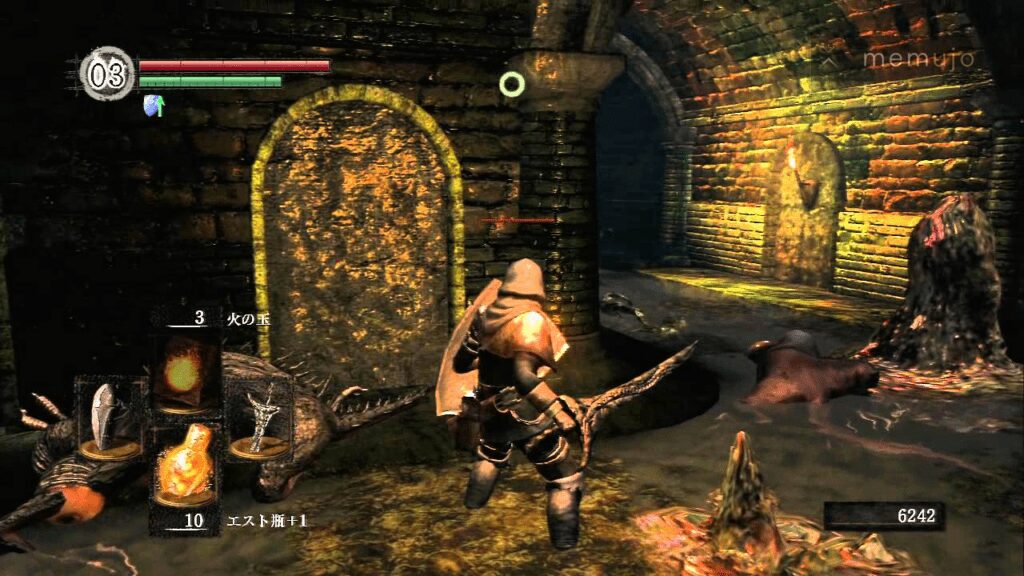
FromSoftware’s Dark Souls is one of the most divisive games ever made — and one of the most important. Its notorious difficulty, its refusal to hold the player’s hand, and its labyrinthine world design built from interconnected shortcuts and hidden passages represented a deliberate counter-movement against the growing tendency to make games easier and more accessible. Director Hidetaka Miyazaki’s philosophy was simple: the reward is proportional to the struggle. And players agreed, in their tens of millions.
Dark Souls also pioneered one of the most innovative narrative techniques in gaming history: environmental storytelling. The lore of Lordran is not delivered through cutscenes or dialogue — it is hidden in item descriptions, architecture, enemy placements, and the positioning of long-dead NPCs. Players who want to understand the story must actively seek it out and piece it together themselves. It is a game that rewards curiosity and punishes passivity, and it inspired an entire genre — the “Soulslike” — that continues to dominate gaming culture today.
3. Half-Life 2 (2004)
Valve’s Half-Life 2 arrived in 2004 and immediately made every other first-person shooter on the market look like it belonged to a previous century. Its physics engine — which allowed players to interact with the world in ways that felt genuinely revolutionary — was only part of the story. The game’s environmental design, its use of silence and pacing, its deeply unsettling dystopian atmosphere, and its seamless integration of story into gameplay without a single loading screen or cutscene interruption set a standard for immersive game design that the industry is still reaching for twenty years later.
Gordon Freeman — who never speaks a word throughout the entire game — remains one of the most compelling protagonists in gaming history, precisely because of that silence. The player is Gordon Freeman. His reactions are your reactions. His world is your world. It is a trick that almost no game has pulled off as completely since.
2. The Witcher 3: Wild Hunt (2015)
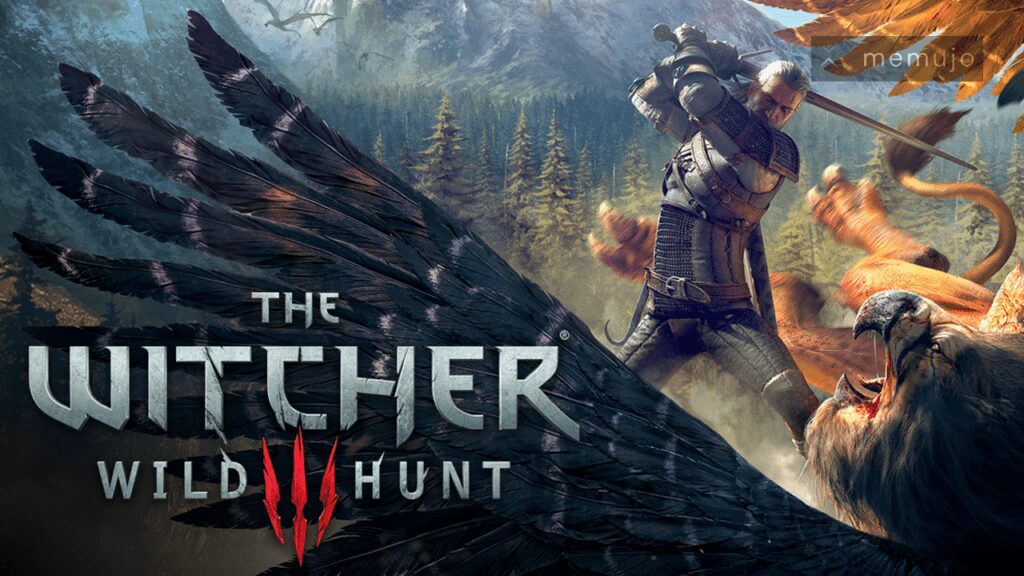
CD Projekt Red’s The Witcher 3 is the definitive argument for the RPG as a storytelling medium. Its world — the war-ravaged Northern Kingdoms of a morally grey fantasy Europe — is populated with hundreds of characters, each with their own fully written backstory, motivation, and arc. Its side quests are not filler — they are self-contained short stories, many of which are more emotionally complex than the main narrative of most other games. The “Ladies of the Wood” questline alone is a masterpiece of dark fairy tale horror that stands up against the best fantasy writing in any medium.
What The Witcher 3 understood better than almost any game before it is that moral complexity is not a gimmick — it is the engine of great storytelling. The game rarely offers a clear “right” choice. Most decisions trade one harm for another. And the consequences of those decisions ripple outward across hours of gameplay in ways the player cannot always predict. It respects your intelligence, takes your choices seriously, and never lets you off the hook.
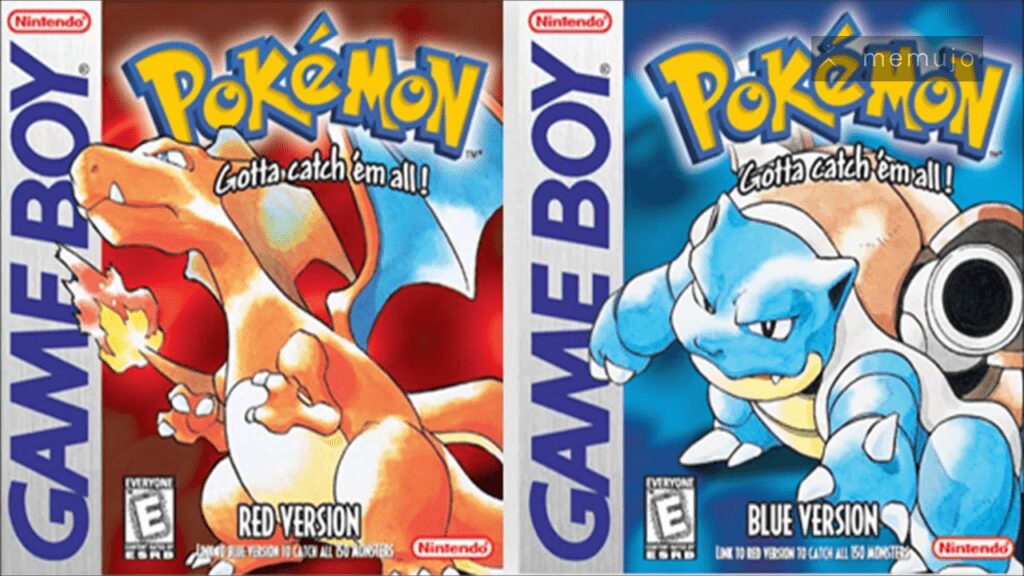
1. Pokémon Red & Blue (1996)
No games on this list have generated more genuine, lasting human connection than the original Pokémon titles. Satoshi Tajiri’s childhood dream of capturing insects and having them fight — translated into a Game Boy RPG about a ten-year-old leaving home to explore a world full of creatures — became one of the most successful media franchises in human history, generating over $150 billion in revenue across games, animation, merchandise, and trading cards.
But the reason Pokémon Red and Blue belong on this list has nothing to do with those numbers. It is because of what the games felt like to the children who played them. The sense of discovery as you explored Pallet Town for the first time. The thrill of a random encounter in tall grass. The pride of a starter Pokémon that had been with you since the beginning evolving into its final form. These are formative emotional experiences — genuine memories — that an entire generation carries with them into adulthood. Very few games have ever managed that. Pokémon did it on a grey-screen handheld with four buttons.
What Do The Best Video Games Ever Have in Common
Look at this list and a pattern emerges. None of these games succeeded because of marketing budgets or brand recognition. They succeeded because they understood something essential about why people play games: not to pass time, but to feel something. To experience agency in a world that makes sense. To inhabit a character, build something, solve something, or simply be somewhere else for a while.
The greatest video games ever made are not the most technically impressive or the most expensive. They are the ones that give you something to carry with you when you put down the controller. A memory. A feeling. A question you are still turning over years later. That is not a small thing. That is exactly what the greatest art has always done — in every medium, in every era, across every culture the world has ever produced.
Video games are the newest member of that tradition. And based on the evidence above, they are more than holding their own.
“Video games are bad for you? That’s what they said about rock and roll.” — Shigeru Miyamoto